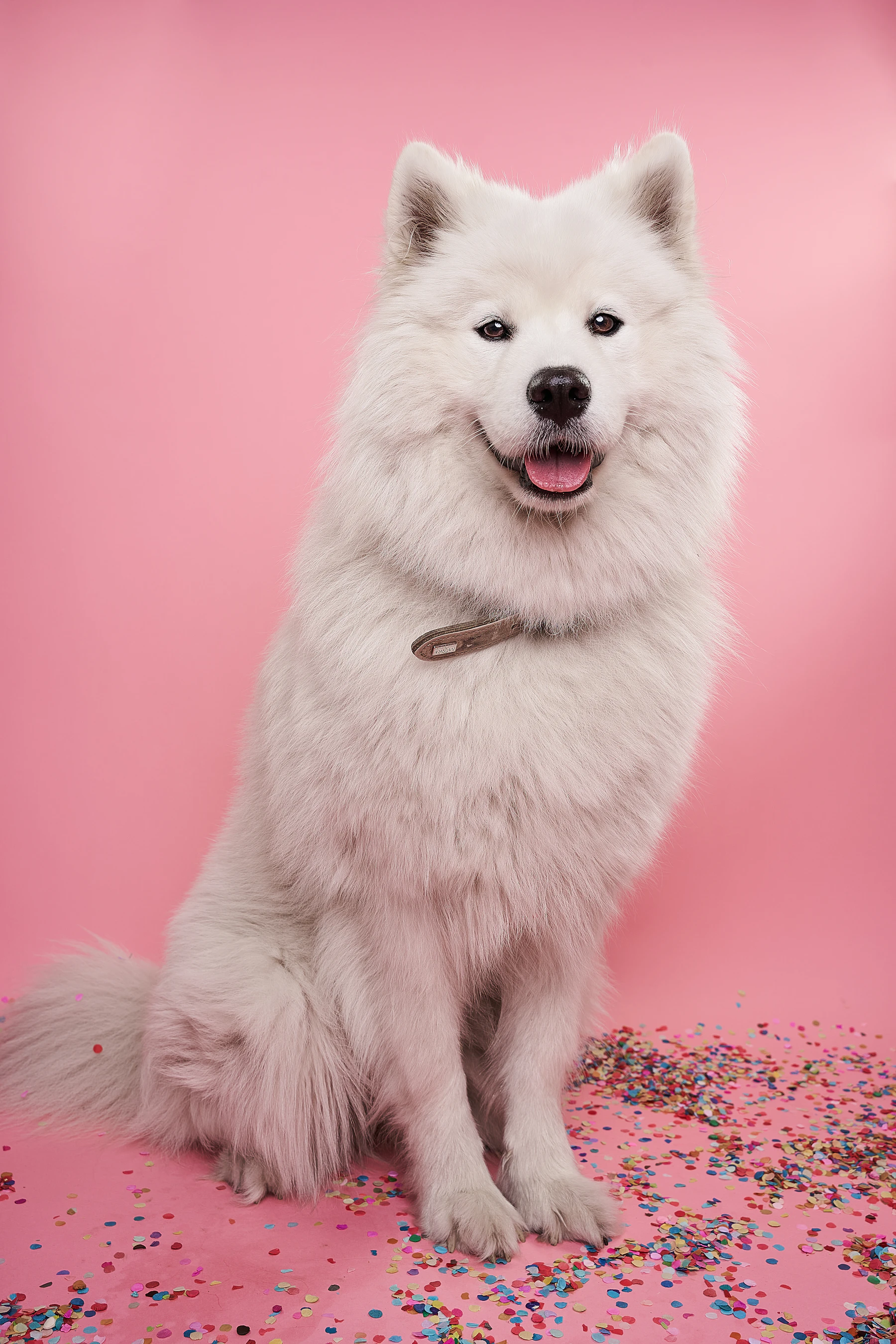
Nobody tells you the whole truth about the first year with a Goldendoodle. They tell you it'll be a lot of work. They tell you puppies are exhausting. They don't tell you about the specific kind of tired you will feel at month four, the particular chaos of the coat blow, or the exact moment — usually sometime around month eight — when you look at this dog and realize that however hard this was, you would do it a hundred times over.
Month by Month: The Honest Version
Weeks 1–8: The Illusion of Manageability
The first two months are deceptively manageable. The puppy is small. The puppy sleeps a lot. The puppy's zoomies are funny because they only cover about four feet of floor. You will think: "This isn't so bad. Everyone was dramatic about this." You are wrong. Enjoy the peace.
This is also when crate training either clicks or becomes a long project. Start immediately, go slow, make the crate the best place in the world. The KONG frozen with peanut butter is your most important piece of equipment for the entire first year — start using it now so the crate is associated with it.
Months 2–4: Welcome to the Chaos Era
The puppy discovers their personality and their legs at roughly the same time. At this age, Arie: destroyed a throw pillow, ate a corner of the couch, stole exactly four socks (and counting), figured out how to open the pantry, and discovered that knocking things off tables was the funniest joke he'd ever told. I bought an enzymatic cleaner in bulk. I still have a lot of it.
This is also the prime puppy class window. Do not skip puppy class. It's not really about the commands — it's about socialization, learning to focus in stimulating environments, and getting a dog used to other dogs and humans early. The foundation you build here pays dividends for the next fifteen years.
Months 4–6: The Adolescent Turn
Six-month-old Goldendoodles are a particular kind of creature. Big enough to be genuinely destructive. Energetic enough to require serious exercise. Smart enough to know exactly what "no" means and decide that this information is interesting but not necessarily actionable. This is the age where "selective hearing" kicks in and you start to understand why dog training exists as a profession.
It helps to understand what's happening biologically: this is canine adolescence. The hormonal shift between puppy and adult means the nice focused puppy you were building in puppy class temporarily becomes a distracted, easily-overstimulated teenager who is making independent decisions about everything. It passes. Keep training, keep consistent, keep your sense of humor.
Months 6–12: The Coat Blow and the Turning Point
Somewhere between 6 and 14 months, the puppy coat transitions to the adult coat. Nobody warned me about this adequately. The soft, fluffy, relatively manageable puppy coat starts to change texture. Matting becomes significantly easier to create and significantly harder to resolve. Brushing frequency needs to increase from "whenever" to "several times a week minimum."
The good news: by month 10 or 11, something starts to shift. The dog is becoming an actual dog. Commands stick more reliably. The energy is still high but it's more directed. The personality is fully in place — and for a Goldendoodle, that personality is so good, so warm, so specifically delightful, that you start to forget the chaos of month four.
Coat Blow Survival
Chris Christensen Big G Slicker Brush — worth every penny during the transition period
See it on Faves →What Nobody Actually Warned Me About
The Separation Anxiety Window
Between 8 and 16 weeks, many puppies go through a fear imprint period — the world becomes scarier and new things are harder to take in stride. Then there's a second fear period around 6–14 months. If your dog was fine being left alone at 4 months and suddenly starts panicking when you leave at 9 months, this is why. Practice departures routinely, keep them low-drama, and don't accidentally train your dog that your leaving is a major event.
The Cost Accumulation
The purchase price is not the cost. The first year with a puppy — vet visits, vaccines, spay/neuter, puppy classes, starter gear, food, grooming appointments — adds up to significantly more than people budget for. My first-year costs beyond Arie's purchase price came in around $4,000. This is normal. Build it into the plan rather than being surprised by it.
Vet visits + vaccines: $300–600
Spay/neuter: $300–600
Puppy classes: $150–300
Starter gear (crate, brush, bowls, leash, collar, ID): $200–400
First year grooming (6–7 sessions): $500–700
Food: $400–700
Buffer for surprises: $300–1,000
The Sleep Thing
You will be tired in a way you didn't expect. Not sleepless-nights tired — most puppies sleep through the night by 3–4 months with proper crate training — but the constant vigilance tired. A puppy requires the same kind of sustained low-level attention as a toddler. You can't just relax. You are always slightly aware of where the dog is and what they might be getting into. That ambient tiredness is real and worth acknowledging.
How Fast They Change
The puppy phase is genuinely short. Arie was puppy-shaped for what felt like five minutes. By eight months he was already solidly in "young adult dog" territory, and by fourteen months the puppy behavior was essentially gone. Take the photos. Take the videos. The chaos is temporary and so is the tiny size.
What I'd Do Differently
Start grooming routines immediately — not when the dog needs a haircut, but from week one. Getting a puppy comfortable with having their paws handled, ears touched, and brushed all over when they're young makes everything easier for the rest of their life. A puppy who experiences grooming as a normal, unremarkable thing becomes an adult dog who doesn't fight the groomer.
Start training earlier and make it a daily habit, not a weekly class. Five minutes of training six days a week produces a significantly better result than one hour a week. The daily repetition is what builds the behavior.
Buy the good brush from the beginning. The cheap brush that I bought first and the good brush I eventually bought are not equivalent. The good brush — the Chris Christensen one on Faves — costs more but actually works. The cheap one extended the mat problem for three extra months.
Buy It First
KONG Classic — the single most useful puppy object in existence, frozen and stuffed
See it on Faves →Mealtimes = Mental Work
Outward Hound Fun Feeder Slo-Bowl — turn every meal into 10 minutes of enrichment
See it on Faves →What Made It All Irrelevant
Here is the thing about the first year of a Goldendoodle: it's a lot, and it's worth every bit of it. Not in the way of "it was hard but now it's easy" (it's still not exactly easy; Arie is still extremely energetic and extremely opinionated). Worth it in the way of: there is a specific, irreplaceable relationship that gets built in that first chaotic year, and by the end of it you have a dog who loves you in a way that is completely disproportionate to anything you deserve.
Goldendoodles love their people with a specific intensity. The reunion joy, the watching-you-while-you-do-literally-anything devotion, the way they seem genuinely interested in your life — not just your snacks. That's the payoff. The first year builds the relationship, and the relationship is extraordinary.
Everything else on this list — the chaos, the cost, the coat blow, the selective adolescent hearing — fades. The dog stays.
Frequently Asked Questions
What's the hardest part of the Goldendoodle first year?
Most owners say months 3–6 — past the sleepy newborn phase, into the full destructive energy of adolescence, before the impulse control of adulthood. The coat blow at 6–14 months is a close second.
When do Goldendoodles calm down?
Noticeably between 18 months and 3 years. The first year is genuinely high-energy. By year three, most owners describe their dog as energetic but manageable. The zoomies never fully stop — they just become more predictable.
How much does the first year with a Goldendoodle cost?
Beyond the purchase price, budget $3,000–7,000 for the first year: vet visits, vaccines, spay/neuter, puppy classes, gear, grooming, food, and a buffer for surprises. The first year is the most expensive.
What should I buy before bringing home a Goldendoodle puppy?
A correctly sized crate with divider, a quality slicker brush, a long lead, puppy food your breeder recommends, a KONG (stuffed and frozen), enzymatic cleaner for accidents, and patience. See the full list on Arie's Faves.
Is the first year the hardest with a Goldendoodle?
Yes, for most people. After year one, you have a dog who knows you, who has a foundation of training, and who has settled into their adult personality. The second year is noticeably easier. The third year is when you stop thinking about it as "managing the dog" and start thinking of it as just... having a dog.


FREE GOLDENDOODLE GUIDE
Get the Goldendoodle Survival Guide
Everything I wish I'd known before getting Arie — first year reality, grooming truth, gear that actually works. Free PDF.
No spam. Ever. Unsubscribe anytime.
Questions? Find us on TikTok @ariepup!
← Back to Blog